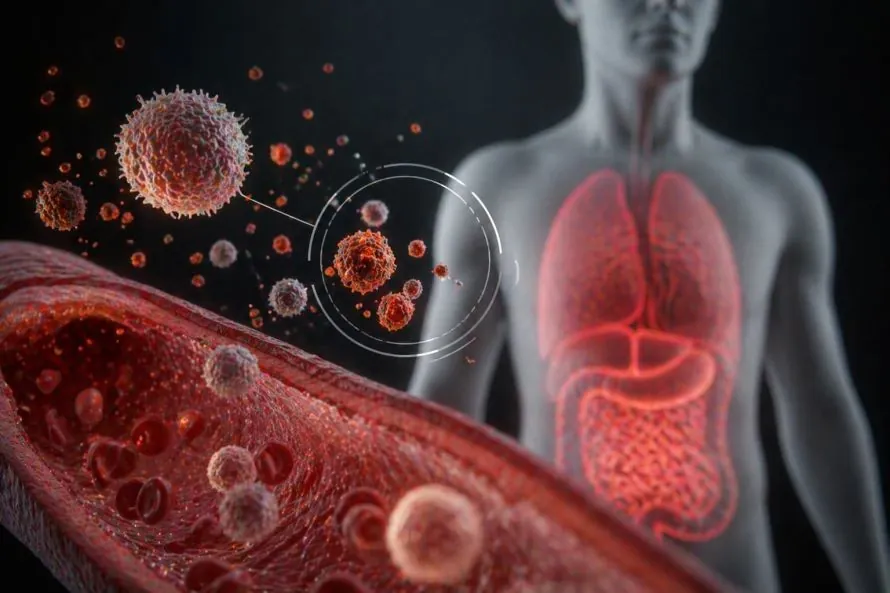

If you’ve ever unbuttoned your jeans after lunch, or planned your outfit around how your stomach might look by the evening, you’re far from alone. Bloating is one of the things I hear about most in clinic, and it’s almost always followed by the same sentence: “but I thought that was just normal.”
It’s common, and I understand why it feels normal when so many people live with it. But a stomach that swells after most meals is your body trying to tell you something, and once you start listening, it usually becomes far easier to fix than people expect.
What bloating actually is
Bloating is that feeling of pressure, tightness or fullness in your belly, and sometimes it comes with visible swelling too. Most of the time it’s caused by gas building up in the gut, by the gut moving food along more slowly than it should, or by your gut being more sensitive to normal amounts of gas than it used to be. That last one surprises people, but a stressed, inflamed or irritated gut can feel things far more intensely, so the same meal that never bothered you before can suddenly leave you uncomfortable.
The causes I look at first
There’s rarely one single cause, which is exactly why quick fixes so often don’t stick. These are the areas I usually start exploring with someone:
- How you eat, not just what you eat. Eating quickly, at your desk or on the go, means you swallow more air and chew less. Digestion starts in the mouth, so food that arrives in your stomach in large pieces makes everything further down work harder.
- Stress. Your gut and brain are in constant conversation through the vagus nerve. When you’re in fight or flight, your body quite sensibly deprioritises digestion, so food sits for longer and ferments more. If your bloating is worse on busy work days, this is often why.
- Low stomach acid or sluggish digestion. Feeling heavy for hours after a protein-rich meal can be a sign that the early stages of digestion need some support.
- An imbalanced microbiome. The bacteria in your gut ferment what you eat, and when the balance shifts, you can end up with more gas than is comfortable. A narrow diet, repeated courses of antibiotics or a stressful year can all play a part.
- Constipation. This one is overlooked all the time. If things aren’t moving regularly, gas gets trapped behind them, and the bloating builds through the day.
- Specific food triggers. For some people it’s certain fermentable carbohydrates, for others it’s dairy or alcohol, but I’d always look at the bigger picture before cutting whole food groups out.
Bloating is a signal, and the most useful question isn’t “what can I take?” but “why is this happening to me?”
What I’d suggest you try this week
Start with the simplest things, because they make more difference than people give them credit for. Sit down for your meals, put your fork down between mouthfuls, and chew until your food is properly broken down. Leave three or four hours between meals rather than grazing all day, because your gut has its own cleaning cycle that only really gets going when you stop eating for a while.
Take a ten-minute walk after your biggest meal, which helps with both movement and blood sugar. Drink most of your water between meals rather than with them, and notice whether your bloating follows a pattern. A simple note on your phone of what you ate, how you slept and how stressed you felt will often reveal more than any single test.
If you’ve been told to go high fibre and your bloating got worse, that’s a sign to build up more slowly, not to give up. I’ve written more about that in my piece on fibremaxxing.
When to see your doctor
Please don’t self-manage bloating if it’s new and persistent for more than three weeks, especially if you’re a woman over 50, or if it comes with unexplained weight loss, blood in your stool, a change in bowel habits that doesn’t settle, difficulty swallowing or vomiting. These need checking by your GP first, and I’m always happy to work alongside them.
Where to start
Bloating is a signal, and the most useful question isn’t “what can I take?” but “why is this happening to me?” If you’d like a clearer sense of what might be behind yours, take my free Root Cause Quiz, which takes about three minutes and shows you which areas of your health look like they need support. And if you’d like to talk it through properly, you can book a complimentary discovery call with me.