“But where do you get your protein?” is probably the question every vegetarian and vegan has heard more times than they can count. The honest answer is that you can absolutely get enough protein without eating meat, but it does take a little more thought, particularly if you don’t eat dairy or eggs.
Why protein matters
Protein is made up of amino acids, the building blocks your body uses to make and repair muscle, skin, hair, hormones, enzymes and immune cells. It also keeps you feeling full and helps keep your blood sugar steady, which affects your energy and cravings throughout the day.
How much do you need?
As a general guide, most healthy adults need roughly 0.75 to 0.8 grams of protein per kilogram of body weight each day, which works out at around 45 to 60 grams for many people. You’ll need more if you’re very active, building muscle, recovering from illness, pregnant or getting older, as we need more protein to hold on to muscle as we age.
Plant protein works beautifully when you eat a good variety of it across the day.
Vegetarians who eat dairy and eggs
If you eat eggs, yoghurt and cheese, you’ll usually find it fairly easy to get enough protein. Greek yoghurt, eggs, cottage cheese and paneer are all excellent sources, alongside the plant foods below.
Vegans and strict vegetarians
Most plant proteins are lower in at least one essential amino acid. Grains tend to be low in lysine, while beans and lentils are lower in methionine, so the trick is to eat a good mix of plant proteins across the day. That way the amino acids in one food fill the gaps in another.
The four main groups to include are:
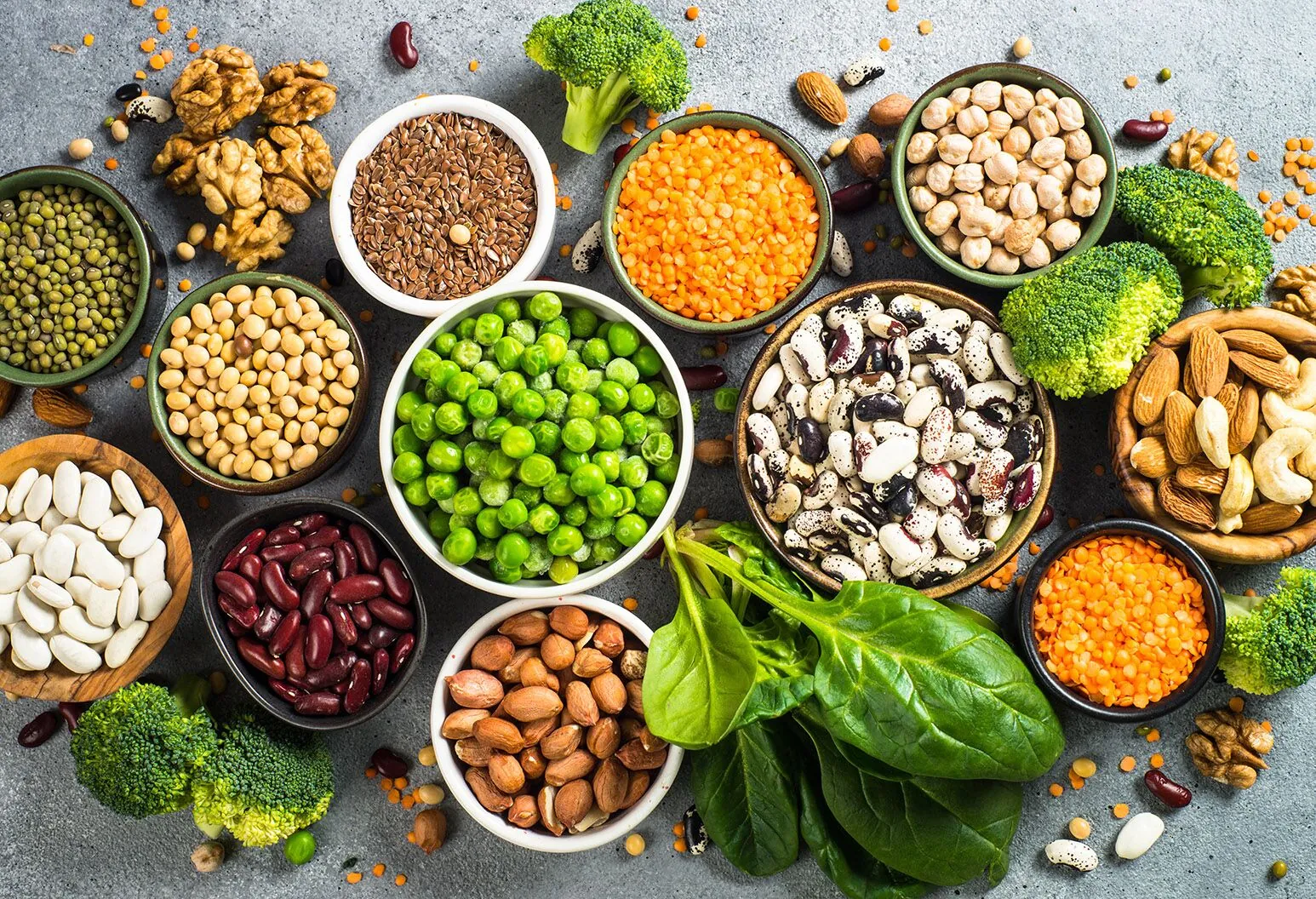
- Legumes: chickpeas, lentils, beans, peas, and soya foods such as organic tofu, tempeh and edamame.
- Grains: quinoa, buckwheat, oats and brown rice.
- Nuts: almonds, cashews, walnuts and nut butters.
- Seeds: hemp, pumpkin, chia, flax and sesame.
You don’t need to combine them in a single meal, as your body pools amino acids over the course of the day. Hummus with wholegrain toast, lentil dahl with rice or a quinoa salad scattered with seeds all count, but simply eating from these groups across the day is enough.
The plant proteins I’d always include
Some especially useful foods are quinoa and buckwheat, which contain all the essential amino acids, chickpeas and hummus, organic tofu and tempeh, peas and edamame, and hemp seeds. Spirulina and sea vegetables add a little extra, and even leafy greens such as spinach and bok choy contain more protein than people expect.
Get more from your beans and nuts
Soaking beans, lentils, nuts and seeds before you cook or eat them helps reduce compounds such as phytates, which can bind to minerals and make them harder to absorb. Many people also find soaked and well-cooked beans much easier to digest. Sprouting and fermenting, as in tempeh, work in a similar way.
Nutrients to keep an eye on
A plant-based diet can be incredibly healthy, but there are a few nutrients that need extra attention, including vitamin B12, iron, zinc, iodine, omega-3 fats and vitamin D. B12 in particular is found almost only in animal foods, so most vegans need a supplement.
If you’d like to make sure your plant-based diet is giving you everything you need, book a complimentary discovery call. You might also enjoy reading about fibremaxxing, which is another area where plant-based eaters often have a head start.